
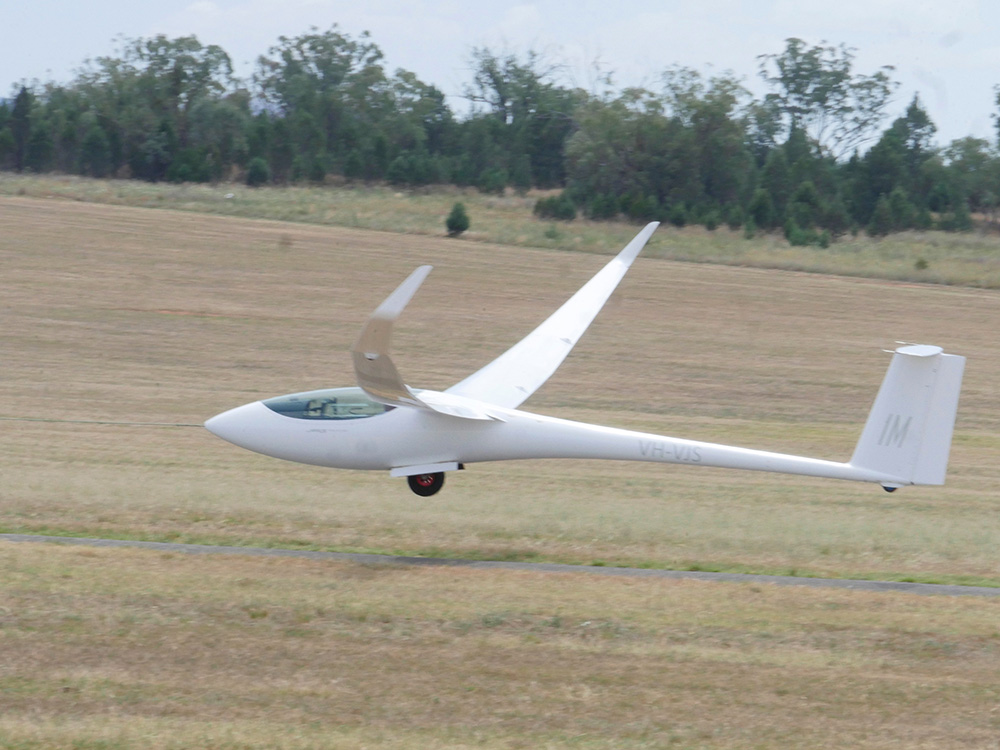
Three major FAI championships are scheduled across two countries in Europe this northern summer.
40th FAI World Gliding Championships
16–30 May 2026 | Rudniki Airfield (EPRU), Częstochowa, Poland
Classes: Open, 20m Multi-seat, 18m | wgc2026.eu
The 40th World Gliding Championships will be held at Rudniki airfield near Częstochowa in southern Poland, organised by the Częstochowa Aeroclub, with up to 120 competitors expected from Europe, North America, Asia, Africa and Australia.
Defending title holders from the 38th WGC in Uvalde, USA (2024) will face strong competition. In the 18m class, Stefan Langer of Germany took gold ahead of Simon Schröder, with France's Christophe Abadie in bronze. The Open class was won by Felipe Levin, with Michael Sommer and Laurent Aboulin completing the podium, while the 20m class saw the Arnold & Striedieck pairing take top honours. Germany also claimed the Team Cup, with France and Austria rounding out the top three.
Rudniki airfield is a well-regarded soaring venue. The terrain around Częstochowa — part of the Polish Jurassic Highland — offers good thermal development through May and June, with typical task distances in the Open and 18m classes ranging from 300 to over 600 kilometres on strong days. May can present variable weather, so pilots comfortable with tactical flying in blue conditions may have an advantage.
Registration is open, with an entry fee of €900. Gliders are also available for rent through the official website for international competitors who cannot transport their own aircraft.
24th FAI European Gliding Championships
11–25 July 2026 | Ostrów Wielkopolski, Poland
Classes: Club, Standard, 15-metre
Six weeks after the World Championships conclude, competition moves to western Poland for the 24th European Gliding Championships at Ostrów Wielkopolski. This event covers the three classes not flown at Częstochowa — Club, Standard and 15-metre — meaning that between the two Polish events, all major gliding classes will have their champions decided.
The EGC is the leading continental title for European pilots and typically draws a competitive field. The Standard and 15-metre classes are central to competitive gliding — aircraft are broadly affordable and the racing is tactical, often with large gaggles and final glides separating the top pilots. The Club class continues to grow in participation, welcoming pilots flying older designs alongside modern fibreglass ships, making it accessible to club-level competitors with national team aspirations.
Ostrów Wielkopolski, in the Greater Poland region, sits in flatter terrain than Częstochowa, which typically suits longer assigned area tasks and classic speed tasks. July conditions in central Poland are generally good for soaring, with warm temperatures and reliable convection that should allow for a reasonable number of valid competition days.
More details and registration information are expected to be published by the Polish Aeroclub in the coming months.
14th FAI Junior World Gliding Championships
1–15 August 2026 | Aalen-Elchingen Airfield, Germany
Classes: Club, Standard | jwgc2026.org
The Junior World Gliding Championships close out the summer at Aalen-Elchingen in Baden-Württemberg, southern Germany — a region with a strong soaring tradition and varied alpine-influenced weather. Open to pilots under 26, the JWGC has a track record of producing pilots who have gone on to compete at the highest levels of the sport.
The Club and Standard classes are used at the JWGC to keep the focus on pilot skill over equipment, and to allow nations with limited resources to participate competitively. The event typically attracts upwards of 80 pilots from more than 20 countries.
The Aalen-Elchingen area offers varied soaring conditions. Located on the Swabian Alb — a limestone plateau rising around 700 metres above the surrounding plains — the region produces strong thermals in summer and allows for cross-country tasks stretching across Germany, Austria and Switzerland. Pilots will need to be comfortable in mountain-influenced air and stronger wind conditions, adding a technical dimension beyond speed and strategy.
For national gliding associations, the JWGC represents an investment in junior development. Selection processes are under way across many countries, with Australia, Great Britain and others having already finalised or progressed their junior team selections.
- 40th WGC Częstochowa: wgc2026.eu
- 14th JWGC Aalen-Elchingen: jwgc2026.org
- FAI Championship Schedule: glidingnews.com/championships-schedule