

Jonker Sailplanes has released a comprehensive update covering developments across its engine, certification, production, and facility programmes. The picture that emerges is of a company working through a period of significant complexity, with most of the critical issues now close to resolution.
The NEO Silent Engine
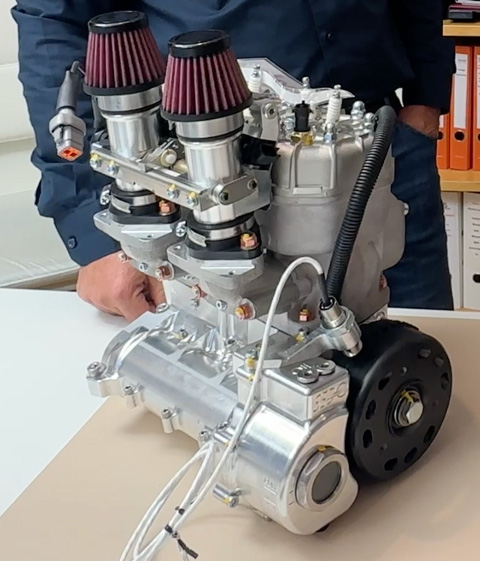
The centrepiece of the update is the SOLO 2625-02i NEO Silent engine, the result of a three-year co-development effort between Jonker and SOLO. The original engine integration revealed vibration levels that could not be managed through mounting changes alone, so the two companies instead addressed the problem internally within the engine itself. A fatigue issue in a transfer gear within the balancing shaft system consumed nearly two years of additional refinement before the final design was locked in mid-2025. Endurance testing is complete, certification documentation has been submitted, and the production line at SOLO is currently turning out four engines per week. To underpin supply security, Jonker has placed an initial order for fifty engines supported by substantial advance payments.
JS3 RES Emergency Airworthiness Directive
The JS3 RES Emergency Airworthiness Directive, the first such directive in the company's twenty-year history, required coordinated action across four organisations. Two distinct issues were identified: a water-cooling system that could trap air and cause overheating, and electromagnetic interference that in one case caused an unexpected motor controller shutdown. Both have been resolved through a combination of hardware changes, improved wiring and grounding, an additional circuit breaker, and a software update incorporating a watchdog reset function. The retrofit takes approximately one day and is available through approved maintenance providers in Europe, with parts supplied at no cost. Across a fleet of roughly 150 aircraft that have recorded around 6,000 engine starts, five malfunctions have been reported, two formally to authorities — a statistically low rate, though Jonker is clear that its target remains zero.
Flight Testing: JS3 RES and JS2
Flight testing for both the JS3 RES and JS2 was conducted in Germany between late 2025 and mid-February 2026, based at DG Aviation's facility in Bruchsal. EASA requested broader coverage of weight, balance, and centre-of-gravity combinations on the JS3 RES, along with additional testing of the 15-metre configuration and single-battery operation. All results matched predictions. The JS2 campaign was completed within three weeks, with the 50 kW fuel-injected engine delivering strong climb performance even from a wet grass runway.
JS5 Open Class
The JS5 Open Class glider, which debuted at the 2024 World Gliding Championships in Uvalde, received strong pilot feedback on its low-speed handling and flying qualities. Maximum take-off weight has since been increased from initially 770 kg to 800 kg to reach the wing loading needed for high-speed cruise performance. Certification progress will determine whether the aircraft competes at the next World Championships.
Production and the New Facility
On the production side, Jonker reports that output was deliberately reduced in 2025 and 2026 to clear congestion that had built up in final assembly while engines were delayed. A target of approximately 42 deliveries in 2026 reflect their stated emphasis on stability and quality over volume. A new facility of around 10,000 square metres is being commissioned roughly ten kilometres from the current airfield, with full operations targeted for April 2026. The vacated building will be taken over by On-Track Technologies, Jonker's development and prototyping partner, for dedicated R&D use.
European Partnership
The company's European partnership, JSDG Production GmbH, is a jointly held LBA-approved production organisation established with DG Aviation that allows DG-1000 fuselage manufacturing to occur in South Africa with final assembly in Bruchsal Germany. South African engineers are currently working on-site at both M&D and DG in Germany to support engine installations and AD resolution ahead of the European flying season.
Looking Ahead: JS4 and Beyond
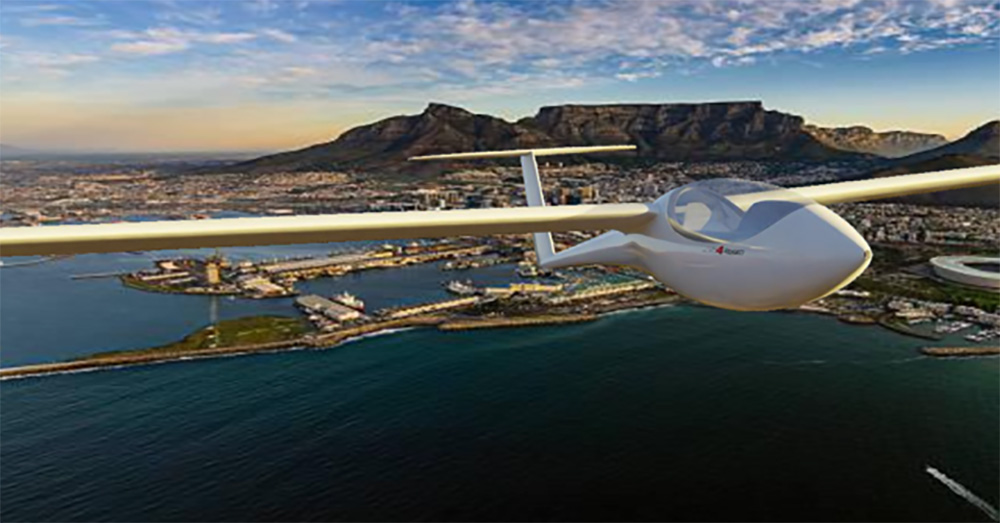
Wing moulds are already being made for the JS4 Standard Class glider, with a first flight targeted for December 2026. Early aerodynamic work on a two-seater has also begun, though Jonker states that the JS4 takes priority.
Assessment
The overall tone of the report is measured. The company acknowledges that the past period has tested customer patience, and it is plainly aware that trust depends on delivered results rather than promises. The fundamentals — engine supply, certification progress, production stability, and financial position — appear to be on a more solid footing than at any point in the recent difficult period.